
Movies & Interviews
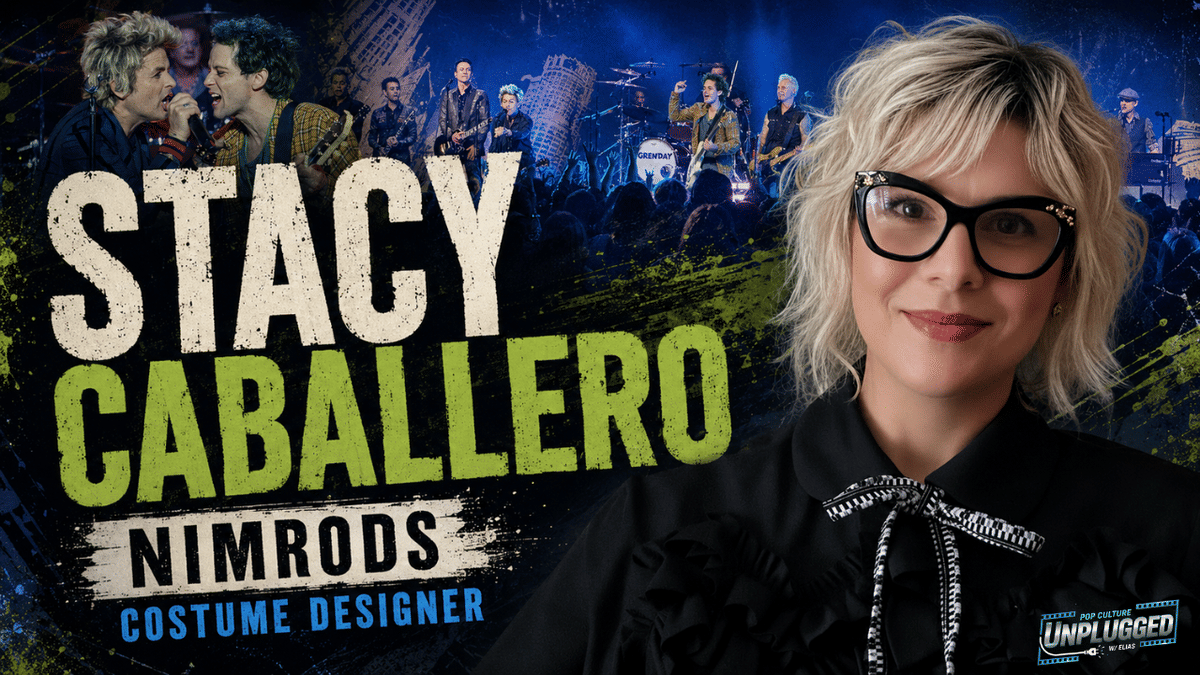
Stacy Caballero on Bringing Green Day’s Punk Style to Nimrods
The costume designer discusses authentic ’90s style, character-driven wardrobes, vintage clothing and the visual storytelling behind the film.
Green Day’s style has always felt authentic because it grew naturally out of the band and the punk scene surrounding them. How did you recreate that visual identity for Nimrods without making the wardrobe feel like a polished modern interpretation of the 1990s?
One things that distinguishes the 90”s is that fashion was coming up from the music, clubs, skateboarding, and the street - Subcultures were creating fashion. I actually don’t think of my design on “Nimrods” as recreating a “’90s look.” I think of it as creating something timeless. When I’m designing a period that people remember so clearly, it’s easy to start checking boxes—flannel, oversized cardigans, baggy jeans, band T-shirts—and suddenly it feels like everyone is wearing a costume of the ’90s. I didn’t want that. Fashion doesn’t change overnight when a decade changes. There’s always spillover from the decade before, and then somewhere in the middle of a decade you start to really see its identity emerge. So I approached the characters first. Who are they? What can they afford? Where are they getting their clothes? What have they had for years? What did they borrow or inherit? I sourced a lot of vintage and thrifted pieces from all over the US, I had local OKC resources, but, I always start shopping in LA. I wanted everything to feel lived in rather than styled. The goal was that you wouldn’t look at the clothes and think, That’s a great ’90s costume. You’d believe these kids got dressed that morning and went out into the world.
When you first began discussing the film with Green Day, what details about their clothing, influences, or early experiences did they share that changed the direction of your original costume concepts?
For me, as a Costume Designer, I always start with the script, after I do a character breakdown, I start sketching and putting together references on character concept boards. It was incredibly valuable to have the real people and the real history behind the story. There’s an authenticity you can’t manufacture when you’re working from people who actually lived it. But I also didn’t want to simply copy photographs. Photographs were a great reference, but they’re not necessarily character design. I was interested in understanding the attitude behind the clothes: the DIY quality, the irreverence, the fact that things weren’t overly considered or precious. Clothes were worn, altered, painted on, passed around, found in thrift and vintage stores. That became much more important to me than trying to reproduce a particular outfit exactly.
Band T-shirts can communicate musical taste, personality, and even social identity without any dialogue. How did you decide which shirts belonged to each character, and what stories were you able to tell through those selections?
The band T-shirts were really important to me because they’re such an immediate form of self-expression. Especially at that age, what you wear can tell people what you’re into, what music you listen to, and your whole vibe before you ever say anything. Billie Joe said something to me that really stayed with me: musicians don’t just wear any band’s T-shirt—it has to mean something to them. I loved that, because it reinforced the idea that these shirts couldn’t just be recognizable bands from the period. They had to feel like choices the characters themselves would have made. So I thought about each character individually—what they listened to, what they were drawn to, and how they wanted to present themselves—which actually led me away from some of the more obvious band tees and toward more personal, unexpected graphics. The shirts became another way of building character without dialogue. That’s where the “Band Graphic Here” shirt came into play. It started as a joke, but then it actually became a costume piece and ended up having a life of its own.
Musicians don’t just wear any band’s T-shirt—it has to mean something to them.Stacy Caballero
Vintage clothing often comes with imperfections, fading, and signs of its previous life. Did you intentionally preserve or create that wear for Nimrods, and how important was it for the costumes to feel genuinely lived in?
I love vintage and thrift stores. I’m very much about recycle, reuse, recreate in my personal life, so when I get characters where that aesthetic makes sense, I get excited to explore it and push the boundaries. Vintage naturally comes with a history….fading, wear, repairs, softness—and I love preserving those imperfections because they make the clothes feel real. Sometimes, when multiples were needed for a character, we had to create that feeling ourselves. We aged and distressed pieces so they felt genuinely worn in rather than “costume distressed.” That lived-in quality was especially important for Nimrods because the clothes needed to feel instinctive and unselfconscious. These characters aren’t getting dressed to define a look—they’re just wearing the things they own, the things they love, and the things that have been with them for a while and make them feel good. That imperfection is part of what makes it feel authentic.
Because the story follows a young band trying to reach Los Angeles and open for Green Day, how does the wardrobe evolve throughout their journey and reflect the characters’ changing confidence, relationships, or sense of identity?
The costumes evolve in a pretty organic way because I never wanted it to feel like the characters suddenly changed their style just because the story was moving forward. It was more about watching the clothes become more lived in and seeing subtle shifts in how the characters carried themselves and adjusted their layered pieces, especially as we moved from cold to warm weather along the road trip from Kansas City to Los Angeles. As the journey goes on, the costumes become more worn, more de-layered, and more individualized. You start to see more of each character’s personality come through—what they hold onto, what they’re comfortable in, and how they relate to one another. The Analog Dogs discover things about themselves along the way. Their friendships and sibling relationships are tested, and each character grows in their own way. They really have the experience of a lifetime on this road trip, and by the end, the world feels full of possibilities for them. That was important to me because the story is really about identity and finding your place. By the time they get closer to Los Angeles and Green Day, I wanted the costumes to still feel completely like them, just more stripped down. They have nothing to lose at that point. They have to make the moves, go after what they want, and make something out of everything they’ve been through together. The costumes reflect that journey.
What is one costume detail in Nimrods that audiences might initially overlook but carries a deeper connection to Green Day, the 1990s, or a specific character’s story?
One detail I really loved…and that took me the most time to find—was Tommy’s leather jacket. It had belonged to his late father and was given to him by his mom, Jodi, played by Jenna Fischer. That jacket already carried a personal history, and in a way, it became a piece of armor for Tommy. It gave him the strength he needed to pursue his dreams and take this huge leap of faith. I also noticed what it did for Mason. The minute he put it on, it gave him confidence and swagger, which was exactly what that costume needed to do. For me, those kinds of details are important because they connect the character to a life outside the frame. It also felt very true to the timelessness I was trying to achieve with the costumes. The jacket has the attitude of the ’90s, but it doesn’t feel locked into a specific moment. It also carries something much more personal about Tommy and his story.
That jacket already carried a personal history, and in a way, it became a piece of armor for Tommy.Stacy Caballero
For someone who wants to bring ’90s punk influence into their everyday wardrobe without looking as though they are wearing a costume, which foundational pieces would you recommend starting with, and how should they be styled?
I’d start with pieces that already feel easy and familiar rather than trying to build a complete “punk look.” A great vintage or washed band T-shirt, a worn-in leather or denim jacket, straight-leg jeans, a plaid shirt, an old cardigan, and simple sneakers or combat style boots can all carry that influence without feeling like a costume. The key is in how you mix and style them….and how you make them your own. I wouldn’t wear every reference at once. Maybe it’s a faded band tee with good jeans and a worn leather jacket, or a plaid shirt tied around the waist with something otherwise very simple. The clothes should feel collected over time, not styled to announce a genre. Personalize them in a way that feels natural…pins, patches, spray paint, graffiti whatever gives the piece some individuality. There should also be a little rebellion in it….pushing outside the norm, breaking a few rules, and making choices that feel personal rather than expected. That’s really at the heart of punk. I also think imperfection helps. A faded shirt, paint stains, a ripped neckline, denim that’s actually been worn with tears and fraying, or a jacket with some history—that’s what gives it authenticity. The ’90s punk influence was never about looking overly polished or precious. It was personal, practical, a little irreverent, and very much about wearing what made you feel like yourself.
Thrifting has become more popular and, in some places, more expensive. What do you look for first when entering a vintage or secondhand store, and how can shoppers recognize a worthwhile piece without overspending?
I usually look first at fabric, construction, and character. I’m drawn to pieces that already have something interesting about them….a great wash, unusual texture, beautiful wear, good fabric content, a strong silhouette, an interesting color, or a detail you just don’t see in newer clothes. I especially love finding pieces that were made before fast fashion became the norm. I also always check jackets, denim, T-shirts, knitwear, and menswear—especially blazers, belts, and buckles…..because there are often great pieces hiding there that can work in unexpected ways. I don’t think something has to be expensive to be valuable. Look at the quality of the fabric, the seams, the buttons, the lining, how it hangs on the body, and whether it feels like it was made to last. And don’t be afraid of imperfections. Fading, repairs, paint, fraying, or a little wear can actually make a piece more interesting, as long as the garment itself is still structurally sound. The biggest thing is not getting caught up in the label or the idea that something is “vintage,” so it must be worth the price. Ask yourself: Would I still love this if I didn’t know the brand? Would I actually wear it? Can I style it several ways? If the answer is yes, then it may be worth it. And I always think about possibility. Sometimes the best thrifted piece isn’t perfect when you find it….it may need to be shortened, altered, patched, painted, or completely reimagined. That’s part of the fun for me: recycle, reuse, recreate.
Your credits range from intimate character-driven projects to massive productions such as Black Panther: Wakanda Forever, Thor: Ragnarok, and Man of Steel. How does the way you build a character’s wardrobe change when moving between grounded realism, period-inspired storytelling, and a heightened superhero world?
The process always starts in the same place for me: the story. It’s all about the story and the characters within it. Who are they, where do they come from, what do they want, how do they move through the world, and what do they want other people to see? The scale of the project may change dramatically, but those questions don’t. With grounded realism, the work is often about restraint. Every choice has to feel believable and lived in…something the character would actually own, repeat, repair, or reach for without thinking about it. The costume shouldn’t announce itself; it should quietly support the performance. With period-inspired storytelling, there’s another layer. I’m looking at the history, silhouette, construction, and social codes of the time, but I’m also asking how much of that history serves this particular character and this particular story. I never want the research to overwhelm the person wearing the clothes. In a heightened superhero world, where I’m often world-building, I can push silhouette, scale, material, symbolism, and technology much further, but I still need an emotional reason for every choice. Even the most extraordinary costume has to tell me something about the person inside it….their power, vulnerability, culture, history, or transformation. So for me, the difference is really in how broadly you can express the character. Grounded work is usually more subtle, while a superhero costume allows you to push those ideas much further, but the goal is still the same: to tell you who that character is before they ever say a word.
Even the most extraordinary costume has to tell me something about the person inside it.Stacy Caballero
As an adjunct professor at DePaul University and a Fulbright Scholar, what is one principle about visual storytelling that you hope every emerging costume designer understands before stepping onto their first professional set?
Just between us, I’d leave the Fulbright reference out for now. We can always revisit that in a follow-up interview once it’s public. For the answer itself, I think the strongest principle is: costume design is storytelling. Whether I’m a professor teaching a class or a costume designer leading a team, one of the things I really try to impress upon emerging designers is that costume design is not about making someone look good….it’s about telling the story. Every choice should come from character, circumstance, psychology, and the world you’re creating with your collaborators. Before you step onto a professional set, I think you have to understand that the costume is already communicating before the actor says a word. Silhouette, color, fabric, fit, wear, repetition….all of those things are giving the audience information, whether they consciously realize it or not. And then there’s collaboration. You can have a beautiful idea, but storytelling in film, television, and streaming is collaborative. You have to understand how your work supports the actor, the director, cinematography, production design, and ultimately the story as a whole. So if there’s one thing I hope my students carry with them, it’s this: don’t design clothes….design the character and tell the story. Thank you.