
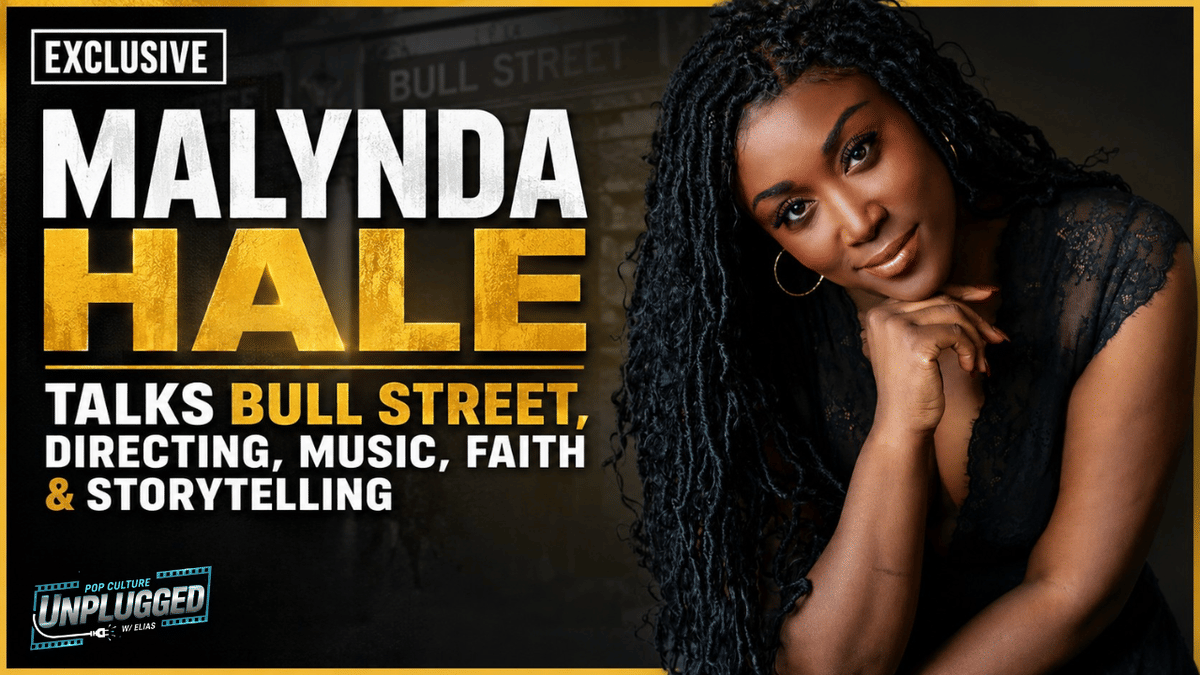
Malynda Hale Talks Bull Street, Directing, Music, Faith & Storytelling
The actress, filmmaker, singer-songwriter and storyteller discusses family legacy, empathy, motherhood, faith and the next chapter of her creative career.
Malynda, thank you so much for taking the time to participate in this feature with Pop Culture Unplugged w/ Elias. You've built an inspiring career as an actress, filmmaker, singer-songwriter, and storyteller, using every creative outlet to explore identity, faith, race, and human connection. With Bull Street arriving on VOD this July and several exciting creative projects underway, we're thrilled to discuss your journey, the stories that drive you, and what's next in this exciting chapter of your career.
Thank you again for your time, and we look forward to sharing your insights with our readers and audience.
1. Bull Street explores powerful themes of family legacy, justice, and the tension between privilege and community. What was it about LouEster Sadie Gibbs that immediately drew you to the role, and what did you hope audiences would take away from her journey?
The first thing that I really resonated with was LouEster's relationship with her grandmother, Mrs. Big-Gal. That dynamic felt very familiar to me before I even finished the script. There's a particular kind of love between Black women across generations that doesn't always get shown in films, and I think that's what Lynn Dow, who wrote and directed the film, built into the center of this story. I hope what audiences take away is that this isn't a story about a legal battle. It's a story about what happens when a family has to fight to keep what was always theirs.
“It's a story about what happens when a family has to fight to keep what was always theirs.”
2. You had the opportunity to work alongside incredible performers like Amy Madigan, Loretta Devine, Arielle Prepetit, and Gary Ray Moore. What was the experience of collaborating with such a talented cast, and did anyone leave a lasting impression on you during production?
The whole cast made me a better actor. I've always believed you should never be the best person in the room because that doesn't push you. Loretta and Amy both challenged me in ways I didn't expect, not through pressure, but through example. Watching how they inhabited their characters, how they made adjustments between takes, how they stayed present and generous, was really a masterclass in acting.
And my relationship with Loretta didn't end when filming did, which I thought was so amazing. I got to direct her in my short film Au Gratin a couple years later, and watching the same person I grew up admiring, that I acted opposite of, now step into a role I was directing, was genuinely very exciting.
3. The film has already earned recognition at several film festivals before its VOD release. What has it been like watching audiences react to Bull Street, and were there any conversations or responses that particularly stayed with you?
I think a lot of the response has been tied to their own personal stories. They're saying it reminded them of their grandmother or their family's land. Lynn built this film around her own family's history and experience, and that truth comes through in how people receive it
4. You've now worked both in front of and behind the camera, making your directorial debut with Curtain Call and following it with Au Gratin. Has becoming a filmmaker changed the way you approach acting, and how do those two creative roles continue to influence one another?
Directing definitely made me a more generous actor. When you've been behind the camera you understand what a scene actually needs, which isn't always what your instinct as an actor tells you it needs. I'm more aware of everything now, not just my piece of it. And Im already a very detail-oriented person, but directing really allowed me to lean into that trait. I think about the final product and how I can edit right then and there. That awareness makes me easier to work with and more useful to how I want to tell the story as well. And acting makes me a better director because I know what it feels like to be in a scene that isn't working, or to need a director to hold space for you to try something you're not sure about. I really want to be a director that people want to work with because of my experience in acting.
“Directing definitely made me a more generous actor.”
5. Through your production company, JMV Entertainment, you've made it clear that meaningful storytelling is a priority. When you're deciding what project to pursue next, what qualities or themes are essential for a story to earn your time and passion?
I'm a huge advocate for untold stories and normalizing an experience that people rarely see reflected back to them. Whether it gives someone watching permission to feel something different, or consider a different perspective, those are the types of stories I want to be involved in creating. I'm also drawn to stories where the emotional stakes are high, but not forced, and that showcase environments and narratives that are deeply human and relatable. My husband, who co-owns the company with me and writes the films we produce, is really a prolific writer that is able to accomplish that. We are a great team.
6. Your career spans acting, filmmaking, music, podcasting, and digital storytelling. While each medium allows you to express yourself differently, is there a common thread that connects everything you create?
The through line for me has always been empathy. Every single thing I make is trying to close a gap between someone's lived experience and someone else's understanding of it. The medium that I do that in shifts constantly but the goal doesn't. I want people to feel less alone and more honest about the world they're actually living in. I want people to have conversations, and tap into their emotions and the things that connect us. I want people to think and feel.
“The through line for me has always been empathy.”
7. Your music has always carried uplifting and deeply personal messages. How has your journey as a singer-songwriter influenced the emotional honesty you bring to your performances as an actress and filmmaker?
I was just listening to some songs I wrote the other day that never got released and music was always where I was my most vulnerable. Sitting down at a piano and not knowing what was going to come out is always so freeing and therapeutic. I think not following any rules and just going for it in music has allowed me to take more risks with acting. You have to be willing to go somewhere before you know what it looks like when you get there. Songwriting trained that muscle in me long before I understood what I was building.
8. Projects like Black Voices Heard and your podcast #WeNeedToTalk tackle important conversations around identity, culture, and social issues. Why has it been so important for you to create spaces where those conversations can happen alongside your entertainment career?
Because the conversations and working in the entertainment industry have never been separate for me. The stories that move people are the ones that are real. I also care the most about stories that don't get enough room in mainstream spaces. Black Voices Heard started because I wanted people to hear directly from our community. I didn't want people to hear about us; I wanted them to hear from us. And #WeNeedToTalk exists because I kept seeing conversations happen around important topics without anyone actually saying the thing that needed to be said. I'm just not built to stay quiet when something needs to be said.
9. Throughout your career, you've spoken openly about faith, female empowerment, motherhood, and navigating life with authenticity. How have those personal experiences shaped not only who you are as an artist, but also the kinds of stories you feel called to tell today?
Everything I am personally informs everything I do professionally; there really isn't a line drawn there. I'm authentic to a fault, honestly. I show up the same way everywhere. My faith shows up in the stories I choose and how I tell them, and it's what leads me. Motherhood made me even more empathetic, but also cautious and aware, and that also plays a part in how I interact with people I work with. When you have daughters that you're raising on how to move through this world, you stop having the luxury of being vague about what you believe. I think being honest about who you are what you feel has to show up in your work. I want to tell stories that my daughters can watch when they're older and understand why I made the choices I did, in my work and in my life.
10. Looking ahead, with Bull Street releasing, Au Gratin continuing its festival journey, and your work across film, television, music, and media expanding, what excites you most about this next chapter, and what kinds of stories are you still hoping to bring to life?
Directing a feature is the next thing I'm working toward. My husband just finished the feature script for Curtain Call, and I will do whatever I have to in order to get the funding to see it made. Beyond that specific project, I want to keep building a body of work that holds complexity. Stories that are funny, stories that are heartfelt, stories about people who don't usually get to be the center of their own narrative. This next chapter for me feels like the one where everything I've been building toward starts to become visible. That's exciting and terrifying at the same time, but I'm ready!