
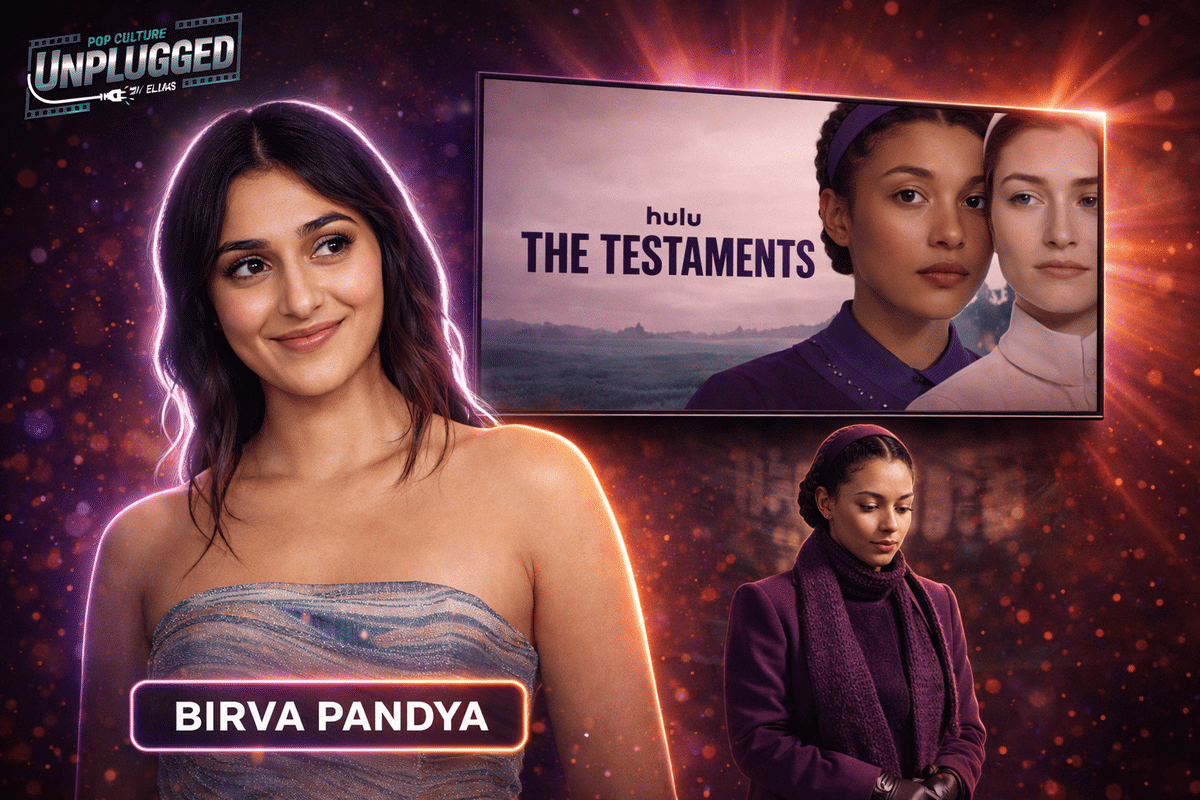
Birva Pandya Talks Miriam in The Testaments
The rising actress opens up about Miriam’s vulnerability, the pressures of Gilead, and bringing a fresh perspective to this new chapter in the world of The Handmaid’s Tale.
Birva Pandya is stepping into one of television’s most anticipated new series with The Testaments, where she plays Miriam. In my interview with Birva, she shared how meaningful the project has been for her, what drew her to the role, and why Miriam’s emotional journey makes her such a compelling character inside this world.
Even before she knew the project was connected to The Handmaid’s Tale, Birva said she immediately connected with the script and the character. That instinct helped shape the way she approached Miriam from the beginning, allowing her to build the character as her own person rather than simply looking backward at what came before.
Interview Highlights
- Birva Pandya shares how she landed the role of Miriam in The Testaments
- Why she chose not to revisit The Handmaid’s Tale while preparing
- How Miriam struggles with order, validation, and self-trust
- The importance of friendship and sisterhood in the series
- Why Episode 5 stands out as one of Birva’s favorites
One of the most interesting parts of Birva’s process was her decision to keep this series separate in her mind from The Handmaid’s Tale. While she was already familiar with that world, she wanted to approach The Testaments as its own story with its own emotional identity. That choice seems to line up perfectly with how she described the show itself: a darker world seen through a younger and more immediate lens.
When talking about Miriam, Birva described a young woman shaped by structure and control. Miriam is someone who clings to order, but beneath that is a deep uncertainty. She looks outward for approval and validation rather than trusting her own instincts, which makes her especially layered in a world that constantly limits personal identity.
That emotional conflict is part of what made the role so relatable for Birva. She spoke thoughtfully about Miriam’s vulnerability and how the character often sees emotional openness as weakness, even when that openness actually reveals strength. It is that push and pull that sounds like it will make Miriam’s journey one of the most human elements of the series.
Miriam’s Emotional Journey
Without going into spoilers, Birva teased that Miriam’s arc is filled with inner conflict. She described the character as someone trying to balance what Gilead expects from her, what her parents expect from her, and what she may actually want for herself. That tension creates a very real coming-of-age struggle inside an oppressive system.
Birva also spoke about how much she loved the moments of sisterhood between the girls. While the series clearly deals with heavy and dark themes, she pointed out that there is also humor, warmth, and genuine friendship running through it. That combination could give The Testaments a slightly different energy while still staying rooted in the same larger world audiences know.
A Fresh Perspective on Gilead
One of the strongest takeaways from the conversation was Birva’s emphasis on perspective. She explained that the show gives viewers a younger point of view, one that initially sees Gilead through “rose-colored glasses” before that image begins to break apart. That framing could make the story especially powerful for both longtime fans and newer viewers.
She also highlighted how important the costumes and production design are in communicating identity, restriction, and control. In a world where uniformity is enforced, wardrobe becomes more than visual style. It becomes part of the storytelling itself.
Birva singled out Episode 5 as one viewers should be excited for, praising its camerawork, visual beauty, costumes, and choreography. If that episode delivers on everything she teased, it sounds like it could become one of the standout chapters of the season.
Final Thoughts
Birva Pandya came away from this project with a deep appreciation for both the cast and crew, and that enthusiasm comes through in every part of the interview. Her take on Miriam suggests a character who is vulnerable, complicated, and searching for her own identity in a world built to suppress it.
If this conversation is any indication, The Testaments is aiming to deliver not just tension and darkness, but also humanity, connection, and a new perspective on a world audiences thought they already understood.